 EN
EN AR
AR RU
RU ZH
ZH FR
FR ES
ES
September 06, 2026 • By KWD
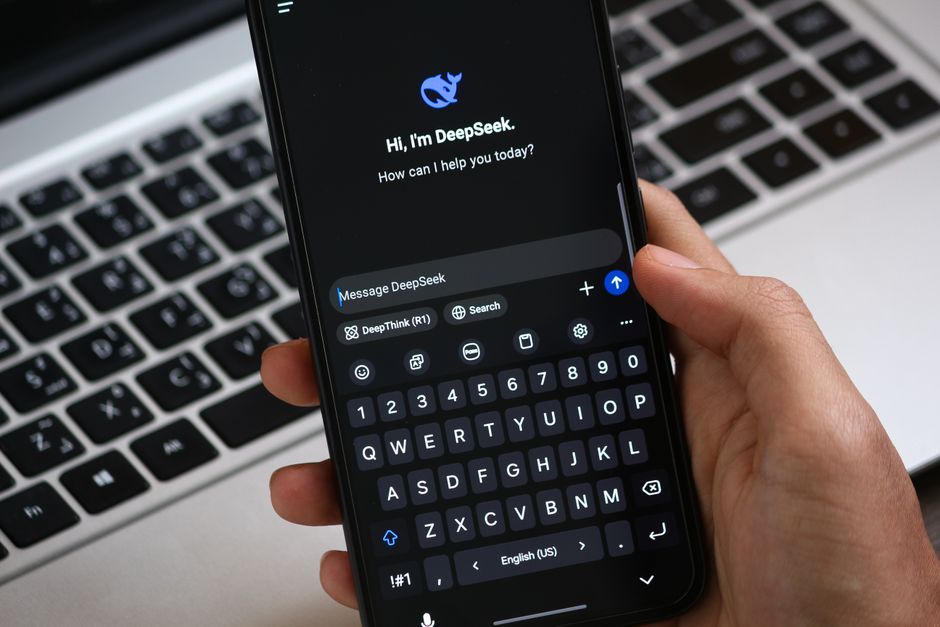
An AI chatbot for websites automates answers to repetitive customer questions but requires knowledge grounding, human handoffs, data compliance, and ongoing maintenance to avoid hallucination, privacy risks, and brand damage.
Key Takeaways
- Deploy a chatbot only if 70%+ of incoming questions are repetitive and low-complexity; otherwise invest in better site search or navigation first.
- Hallucination risk requires grounding chatbots in verified company data; ungrounded AI confidently generates false answers that contradict your actual policies.
- Chatbots must include seamless human handoff with conversation history visible to support staff; isolated bots frustrate customers and lose context.
- Kuwait law 20/2014 and industry-specific regulations govern customer data; verify encryption, retention periods, third-party compliance, and opt-out disclosures before deployment.
- Chatbots require 10–20% of deployment cost monthly for retraining, monitoring, performance updates, and seasonal adjustments; they are not set-and-forget systems.
Should every business website have an AI chatbot for website? Not necessarily. The honest answer is that an AI chatbot solves a specific problem—instant answers to repetitive questions—but it introduces new risks: hallucination, privacy exposure, and ongoing maintenance costs. Before you add conversational AI to your Kuwait business site, you need to know when a chatbot genuinely helps customers and when smarter design, search, or human support is the better investment.
When a Website Chatbot Truly Adds Value
An AI assistant is worthwhile only if your business receives frequent, similar customer questions. Common scenarios include:
- High-volume, low-complexity inquiries: "What are your business hours?" "How do I reset my password?" "Do you ship to Al Jahra?" A chatbot answers these in seconds without human overhead.
- E-commerce sites: A website chatbot grounded in your product inventory can guide customers, answer stock questions, and reduce cart abandonment by offering instant help before checkout.
- Service businesses with intake forms: Appointment scheduling, intake questionnaires, and lead qualification—chatbots excel when the workflow is predictable.
- Multi-language support: For Kuwait businesses serving Arab and English-speaking customers, conversational AI can provide real-time translation and multilingual responses without hiring bilingual staff.
- Round-the-clock availability: If your team works 9–5 but customers ask questions at midnight, a chatbot bridges that gap—though quality matters; a poor chatbot at 2 AM frustrates more than it helps.
The key test: Can the chatbot answer 70%+ of incoming questions with high confidence? If yes, it saves your team time and improves customer satisfaction. If no, it wastes resources and erodes trust.
The Hallucination Risk: Why Knowledge Grounding Matters
Conversational AI is powerful, but it has a critical flaw: it can confidently invent answers that sound plausible but are completely false—a phenomenon called hallucination. A customer asks, "What's your return policy?" The chatbot, not trained on your actual policy, generates something that sounds reasonable but contradicts your terms. The customer feels misled. You face disputes.
To prevent this, your AI chatbot must be grounded—fed only verified, company-specific data: your FAQ, product specs, policies, and service details. Grounding is labor-intensive. It requires:
- Compiling a comprehensive, accurate knowledge base.
- Testing the chatbot against real customer questions to catch errors.
- Regular updates whenever policies change (new hours, shipping rates, product launches).
- Monitoring customer interactions and retraining on failures.
For Kuwait businesses in regulated industries—financial services, healthcare, legal—the hallucination risk is even higher. A chatbot cannot give legal advice. It should never give investment guidance. If your business operates in a compliance-heavy space, customer service AI must include a clear disclaimer and seamless handoff to a human for sensitive queries.
The Handoff Problem: Why Your Chatbot Needs a Human Exit
No chatbot is 100% accurate. Customers will ask questions outside the chatbot's knowledge or that require judgment. A frustrated customer stuck in a chatbot loop becomes a lost customer.
A good website chatbot needs a clear handoff mechanism: "I'm not sure about that. Let me connect you to our team." The handoff should be instant and warm—the human agent sees the conversation history and can continue without repetition. Without this, your AI assistant becomes a friction point.
Integration with your CRM is essential. If your team uses Salesforce, HubSpot, or even a spreadsheet, the chatbot must feed customer interactions back into that system. Disconnected chatbots lose context and frustrate your support team.
Privacy, Data Security, and Compliance
Every conversation with a chatbot is data. In Kuwait, data protection is governed by Law No. 20 of 2014 (the Information Protection Law) and increasingly by industry-specific regulations. Before deploying conversational AI, you must ask:
- Where is data stored? Cloud-based chatbots (OpenAI, Google) may process your customer data in foreign servers. Is that compliant with your industry?
- Is encryption enabled? Customer names, emails, and queries should be encrypted in transit and at rest.
- Can users opt out? Your privacy policy must disclose chatbot use and give customers a choice.
- How long is data retained? Most chatbot platforms log conversations for training. Define a retention period (30, 90, or 365 days) and delete after.
- Who owns the data? If you use a third-party chatbot platform, clarify ownership and your ability to export or delete customer data.
For customer service AI handling payment information, PCI DSS compliance is non-negotiable. Never let a chatbot see credit card numbers. Similarly, if you collect health or financial data, ensure your chatbot vendor is compliant with those specific regulations.
The Maintenance Burden: Chatbots Aren't Set-and-Forget
A common misconception: deploy a chatbot and it runs forever. In reality, AI chatbots for websites require ongoing work:
- Retraining: As your business evolves—new products, changed policies, seasonal variations—the chatbot's knowledge base must be updated. Monthly or quarterly reviews are typical.
- Performance monitoring: Track which queries succeed, which fail, and where customers get frustrated. Use these metrics to improve.
- User feedback loops: After a chat, ask: "Was this helpful?" Flag low-scoring conversations for human review and retraining.
- Backup and support: If the chatbot platform has downtime, your website should gracefully degrade to a contact form, not a broken experience.
- Seasonal adjustments: During Ramadan, Eid, or peak shopping periods, customer questions and availability change. Chatbot behavior should too.
The cost of maintaining a chatbot is often underestimated. A business with 500 monthly inquiries might spend 5–10 hours per month on updates, monitoring, and fixes. If your team is already stretched, this becomes a burden.
Alternatives Before You Deploy a Chatbot
Before investing in website chatbot technology, try these lower-cost fixes:
Better Information Architecture
Many customer questions can be prevented with clear, scannable website structure. If customers ask "Where's your contact form?" because it's buried on page 5, fix the navigation first. A chatbot is a band-aid on a broken design.
Improved Search
A search function with smart filters beats a chatbot for many queries. If your site has 200+ pages or products, invest in a search bar with autocomplete, facets (filter by price, category, color), and relevance ranking. Customers who can find answers themselves are faster and happier than those waiting for a chatbot response.
Self-Service Knowledge Base
A well-organized FAQ, help center, or documentation site solves customer problems without AI. Tools like Notion, Zendesk Help Center, or even a WordPress knowledge base cost far less than a conversational AI system and often perform better because they're direct and human-readable.
Chatbots for Specific Tasks
Instead of a general-purpose AI assistant, use simpler, rule-based bots for narrow functions: appointment booking (Calendly widget), support ticket creation (form bot), or FAQ navigation (decision tree). These are more reliable and require less maintenance.
Human Support With Better Tools
If you have a support team, equip them with better tools—faster ticketing, shared templates, knowledge bases they can search in real time. Sometimes the most efficient "chatbot" is a human with the right CRM and 30 seconds per query. A customer service AI should augment your team, not replace it.
When an AI Chatbot Makes Business Sense
If you've tried alternatives and your support volume is still high, an AI chatbot for website may be justified. Consider these factors:
- Query volume: 100+ similar questions per month suggests a chatbot ROI.
- Knowledge complexity: If answers require judgment or nuance, a chatbot struggles. If they're factual and consistent, it thrives.
- Team capacity: If your support team is at 90%+ utilization and can't hire, a chatbot can absorb overflow.
- Customer preference: Ask your audience. Some customers prefer instant chatbot responses; others want human contact. Survey your users.
- Budget for maintenance: Allocate 10–20% of the chatbot cost to ongoing care. If you can't sustain that, a chatbot will degrade and damage your brand.
Implementation Path for Kuwait Businesses
If you decide to move forward with website chatbot deployment, here's a practical approach:
Step 1: Audit Your Questions
For two weeks, collect every customer inquiry—via email, phone, contact form, social media. Categorize by type. Are 60%+ questions repetitive? If yes, proceed. If no, focus on navigation or search first.
Step 2: Scope the Knowledge Base
Document everything the chatbot must know: FAQs, product specs, policies, pricing, hours, locations, shipping rules, return policies. This becomes the chatbot's brain. A larger, messier knowledge base requires more grounding effort.
Step 3: Choose a Platform vs. Custom
Pre-built platforms (Drift, Intercom, Zendesk, HubSpot Chatbot) are faster and cheaper to launch but less flexible. Custom AI chatbot development—grounded in your systems, integrated with your CRM, compliant with Kuwait data laws—offers more control but higher initial cost and longer timelines. The cost of custom development is quoted to scope after a free consultation with our team, depending on knowledge base size, integrations, and feature complexity.
Step 4: Test and Refine
Launch as a pilot on a single page or offer it as an opt-in widget. Monitor performance: What questions does it answer well? Where does it fail? Refine the knowledge base and retest before full rollout.
Step 5: Monitor and Maintain
Set up dashboards to track chatbot performance: accuracy, customer satisfaction, handoff rate, and conversation length. Assign a team member to review interactions weekly and flag failures for retraining.
The Final Verdict
An AI chatbot for website is a powerful tool, but not a universal solution. It works best when your business has high-volume, repetitive customer questions, a clear knowledge base, a team to maintain it, and a realistic understanding of its limits. For many Kuwait businesses—especially smaller operations or those in specialized industries—investing in better website design, search, and human support delivers faster ROI and happier customers.
The question isn't "Should every business have a chatbot?" but rather "Does my business have a problem this chatbot solves?" If you're unsure whether conversational AI is right for your website, we can help you audit your customer needs and design the best solution—whether that's a sophisticated AI assistant or a simpler alternative. Our web design packages (starting at KD 450 for Basic, KD 650 for Premium, and KD 950 for Professional) include modern information architecture and self-service tools that often prevent the need for chatbots in the first place. Get a free consultation to discuss your specific situation and find the right approach for your Kuwait business.

