 EN
EN AR
AR RU
RU ZH
ZH FR
FR ES
ES
June 22, 2026 • By KWD
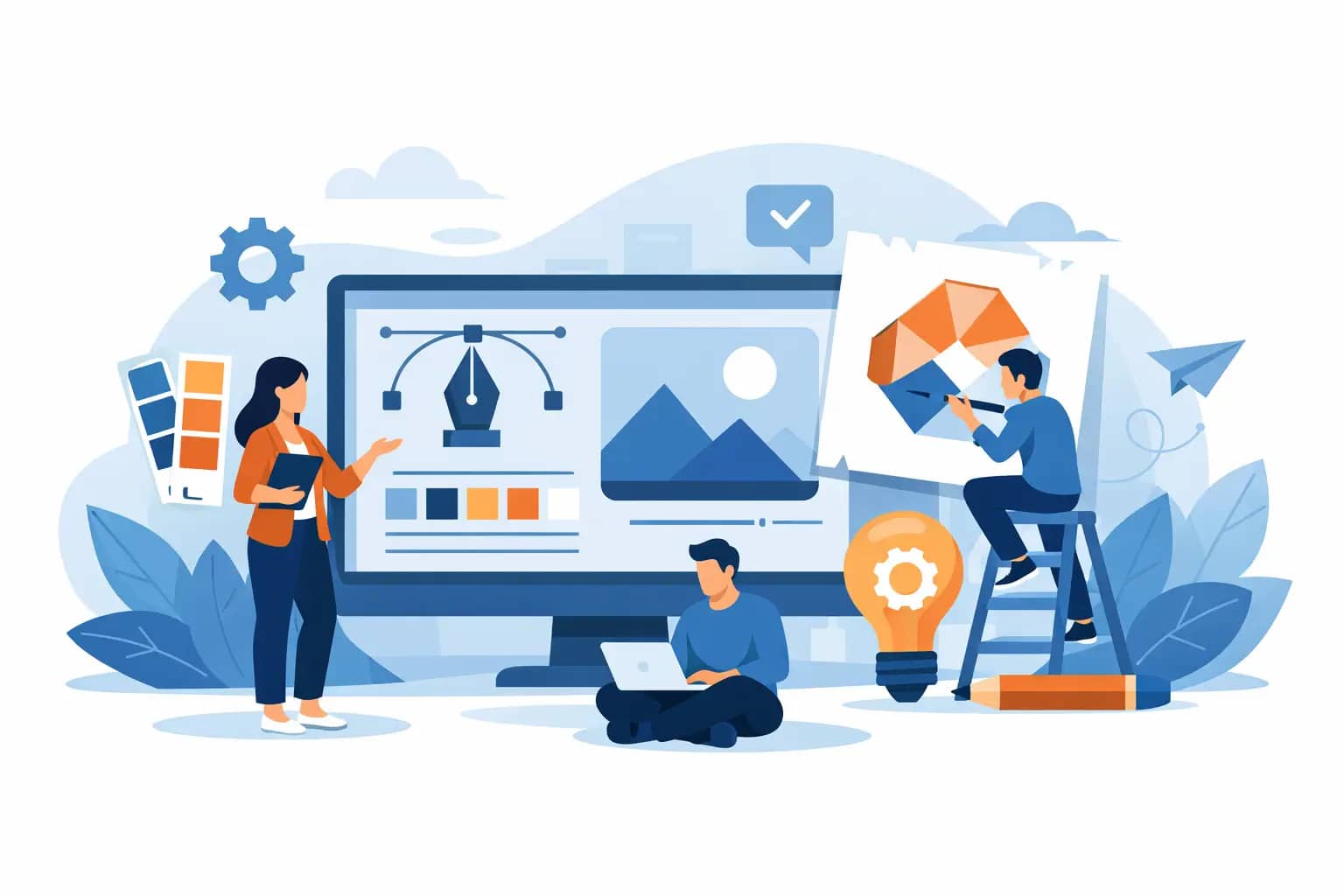
Custom design creates websites, applications, and brand experiences built specifically around a company's objectives, audience, and market position, rather than forcing the business to fit a generic template.
Key Takeaways
- Custom design aligns visual identity, UX, performance, and functionality in ways templates cannot achieve.
- Template websites inherit bloated code, design constraints, and plugin dependencies that become expensive to fix.
- Custom solutions reduce page weight and improve load times by building only what the business actually needs.
- Properly planned custom architecture supports future growth through integrations and new features without costly rebuilds.
- Custom design improves internal operations by reducing manual work and connecting business systems more effectively.
A business website that looks acceptable on launch day can still become a liability six months later. Slow pages, awkward user journeys, weak search visibility, and rigid templates often create hidden costs that show up in lost leads, support friction, and expensive workarounds. That is where the question of what is custom design benefits becomes practical, not theoretical. For businesses investing in digital growth, custom design is not just about appearance. It is about building a digital asset around real business goals.
What Is Custom Design Benefits in Real Terms?
Custom design means creating a website, application, interface, or brand experience specifically for a company’s objectives, audience, workflows, and market position. Instead of starting with a generic template and forcing the business to fit inside it, the design and development process starts with the business itself.
So when decision-makers ask what is custom design benefits, the answer is simple. The benefit is alignment. A custom solution aligns visual identity, user experience, technical performance, content structure, and business functionality in a way that prebuilt options rarely can.
That alignment matters whether you are serving B2B buyers, retail customers, internal staff, or a regional audience with specific language, behavior, and trust expectations. A custom approach gives you control over how people experience your brand and how efficiently your systems support that experience.
Why Businesses Outgrow Templates
Templates have their place. They are useful for testing a concept quickly, launching a temporary campaign, or getting a basic web presence online with limited scope. The problem starts when a growing business expects a template to support unique sales processes, integrations, branding standards, or performance targets.
Most template-driven builds come with compromises. You may inherit bloated code, design constraints, plugin dependency, and a layout built for broad use rather than your actual customer journey. On the surface, the site may look modern. Under the hood, it can be difficult to scale, secure, optimize, or customize without breaking core functionality.
For SMEs and corporate teams, these limitations become expensive over time. Teams often end up paying twice - first for the quick build, then again for redesigns, patchwork fixes, or migrations once the platform can no longer support the business.
The Core Benefits of Custom Design
Stronger brand credibility
A custom digital presence helps a company look established, intentional, and consistent. That matters when prospects compare several providers in the same category. If your website feels generic, your business can feel generic too, even if your service quality is exceptional.
Custom design allows every visual and structural element to reinforce your positioning. Typography, layout, interaction patterns, content hierarchy, and calls to action can all be shaped around your audience’s expectations. For companies in competitive markets, that level of polish can improve trust before the first sales conversation even starts.
Better user experience
User experience is not a design trend. It is a business function. When visitors cannot find information quickly, complete a request, or move through the site naturally, conversion rates suffer.
A custom approach lets you design around real user intent. A service-based company may need clear quote pathways and trust-building content. A corporate portal may need role-based access and structured navigation. An e-commerce operation may need streamlined filtering and checkout logic. Good custom design reduces friction because it is planned around actual user tasks, not generic assumptions.
Performance and speed that support growth
Template websites often include unnecessary features, scripts, and styling frameworks that slow performance. Custom design and development can reduce this weight by building only what the business needs.
This improves load times, mobile usability, and operational stability. It also supports search performance and user retention. If a site is slow, particularly on mobile networks, many visitors will leave before engaging with the content. Faster websites tend to keep more users active and move more of them toward inquiry or purchase.
Search visibility with the right foundation
Search optimization is more effective when the site architecture is planned properly from the start. Custom design supports cleaner code structures, better content hierarchy, stronger technical SEO setup, and page layouts that match search intent.
This does not mean every custom site will rank automatically. Search visibility still depends on strategy, content quality, competition, and ongoing optimization. But a custom-built platform gives your SEO effort a stronger base than a rigid template that limits structure and performance.
Scalability without constant rebuilding
One of the clearest benefits of custom design is future readiness. A business may begin with a corporate site and later need booking tools, multilingual content, lead management, secure client access, or third-party integrations. If the original build was too restrictive, each new requirement becomes difficult and costly.
Custom solutions can be planned with growth in mind. That does not mean overbuilding. It means creating a smart architecture that can evolve as the business evolves. For companies pursuing digital transformation, this flexibility is a serious advantage.
What Is Custom Design Benefits for Operations?
The conversation often focuses on front-end appearance, but custom design also improves internal efficiency. A well-planned platform can reduce manual work, improve content management, and connect business systems more effectively.
For example, custom dashboards, forms, workflows, and admin tools can save time for marketing teams, sales teams, customer service, and operations. Instead of adapting your process to software limitations, the digital product can be built to support how your team actually works.
That operational gain is easy to overlook during procurement. Yet over time, it can deliver major value. Better efficiency means faster updates, fewer recurring issues, and less dependency on workarounds.
Where Custom Design Delivers the Highest ROI
Not every project needs the same level of customization. The best returns usually come when the website or application has a direct impact on revenue, reputation, or service delivery.
Businesses with complex offerings, multiple audiences, regional market requirements, or ambitious growth targets often benefit most. The same is true for companies with outdated websites, fragmented systems, or a need to differentiate in crowded sectors. In those cases, custom design is not an extra. It is part of building a stronger business case online.
A company like DATA typically approaches this as a partnership issue rather than a design-only issue. The goal is not simply to deliver a nicer interface. The goal is to create a digital foundation that performs, scales, and supports measurable business outcomes.
The Trade-Offs Decision-Makers Should Consider
Custom design has clear advantages, but it is not the right fit for every budget or timeline. It generally requires more planning, more collaboration, and a higher initial investment than using an off-the-shelf theme.
That investment makes sense when digital performance matters. If your website is central to lead generation, credibility, customer experience, or operational workflow, cutting corners at the foundation can cost more later. If your needs are temporary or minimal, a lighter approach may be enough.
The key is making the decision based on business requirements, not just launch cost. A cheaper build that limits growth, weakens usability, or creates technical debt is not necessarily the lower-cost option.
How to Know If Your Business Needs Custom Design
There are several practical signs. Your current site may look dated, load slowly, or fail to convert traffic into leads. Your brand may not reflect the level of business you actually operate. Your team may struggle with content updates, vendor coordination, or disconnected tools. You may also be entering a new market, expanding services, or preparing for a more serious digital strategy.
When those pressures appear, custom design becomes less about preference and more about fit. Businesses that want stronger positioning, better performance, and room to scale usually reach a point where templates stop being efficient.
Choosing the Right Custom Design Partner
The quality of the result depends heavily on the partner behind it. A capable team should understand design, development, performance, user behavior, branding, and business objectives together. That matters because a beautiful interface with weak technical execution still creates problems.
Look for a partner that asks strategic questions early. They should want to understand your audience, goals, operational challenges, and growth plans before discussing layouts or features. The best outcomes come from teams that think beyond launch and build with long-term support in mind.
Custom design works best when it is treated as part of a broader digital strategy. That includes not only how the site looks, but how it performs, ranks, integrates, and evolves over time.
If you are still asking what is custom design benefits, the most useful answer is this: custom design helps your business stop adapting to digital limitations and start using digital infrastructure as a competitive advantage. When the platform is built around your brand, users, and growth goals, every improvement becomes easier to make and more valuable to keep.

